
Logo design costs depend on whether you need an existing design adapted, an original logo, or a broader visual identity; there is no single small-business rate to apply in 2026. Your quote should also identify revisions, usage rights, final files, and any website or print updates outside the design work. Compare the complete handoff, not just the headline fee.
- Answer how much does logo design cost by comparing scope, revisions, ownership, and usable files—not unrelated quotes.
- An original logo and a full visual identity are different projects; request separate scopes.
- The Little Web Design Shop builds websites and marketing collateral; confirm logo-specific work before including it in your project.
- Approve the logo in real website and print layouts before accepting the final files.
Why this matters
A logo project does not end when you approve a picture. You need artwork you can use on your website, business documents, and other customer-facing materials without starting another design project.
For a 2026 business launch or refresh, separate the artwork from its rollout. The Web Design Shop builds and maintains websites, e-commerce stores, and marketing collateral for small business owners and organizations. Treat those applications as a distinct part of your brief rather than assuming a logo quote includes them.
The practical question is not simply whether a proposal fits your budget. It is whether the proposal leaves you with the assets and permissions your business actually needs.
How much does logo design cost for a small business?
The useful cost is the quote for your defined project, including its agreed deliverables. A logo-only assignment and a full identity project do not buy the same work, so comparing their totals without comparing scope gives you the wrong answer.
Ask each provider to complete the same breakdown. Use the table below as a proposal checklist, not as a promise that every provider includes these items.
| Part of the project | What to ask the provider to specify | Why it belongs in the comparison |
|---|---|---|
| Brief and research | Business goals, audience, existing materials, and research tasks | Establishes what the design must communicate |
| Design development | Original concepts, adaptations, and presentation format | Defines what you receive before selecting a direction |
| Revisions | Included changes, approval stages, and work outside scope | Prevents an open-ended approval process |
| Final artwork | File formats, layouts, color versions, and editable files | Defines what you can use after approval |
| Rights and licenses | Ownership terms and restrictions on included assets | Separates possession of files from permission to use them |
| Rollout | Website, document, packaging, or other material updates | Keeps implementation separate from artwork creation |
Ask for exclusions beside inclusions. A proposal that explicitly excludes printing or website changes is easier to evaluate than one that leaves you guessing.
Compare quotes using the same brief
Send every provider the same business name, intended uses, required files, and approval process. Otherwise, you are asking different businesses to price different assignments.
Keep assumptions out of the comparison. If editable artwork matters to you, put it in the brief; do not infer that a phrase such as final files includes it.
Existing-design adaptation: best for a defined starting point
Choose an adaptation project when you already have artwork you are permitted to use and need a clearly described change. Examples include adjusting an existing layout or preparing approved artwork for another application.
The advantage is a narrower assignment; the limitation is that the starting design constrains the result. Confirm that the work is adaptation rather than an original identity project, and ask whether the provider needs the original editable files.
Before commissioning changes, establish who owns the existing artwork and what your agreement permits. Having an image saved on your computer does not, by itself, establish ownership or modification rights.
Original logo design: best for a new visual mark
Choose an original-logo brief when your business needs a new identifying design rather than a modification to existing artwork. Describe your customers, business name, intended uses, and any elements the design must avoid.
The advantage is the opportunity to build the design around your brief. The limitation is the need to make and approve design decisions; original artwork does not remove the need for clear feedback.
Ask the provider to distinguish concept development from revisions to a selected direction. A request to refine lettering is different from discarding the approved direction and starting again.
Visual identity: best for coordinated business materials
Choose a visual-identity project when the logo is only part of the problem. Your brief might also call for color specifications, typography guidance, document layouts, and instructions for consistent use.
The advantage is coordinated guidance across the materials included in the scope. The limitation is a broader project to review and maintain; an identity package still does not automatically include updating every existing business asset.
For a 2026 launch, list the materials you need immediately and those you can address separately. Do not commission a broader package simply because it contains more deliverables.
Which scope fits your business?
| Scope | Best for | Main advantage | Main limitation |
|---|---|---|---|
| Existing-design adaptation | A business with usable artwork and a specific change | Keeps the assignment focused | Depends on the starting artwork and permissions |
| Original logo design | A business needing a new identifying mark | Centers the work on a new design brief | Requires decisions about direction and revisions |
| Visual identity | A business needing coordinated design guidance | Addresses more than the logo alone | Creates a broader approval and implementation task |
Select the scope before selecting the provider. A larger package is not automatically a better fit for a business that needs a focused repair.
Why logo design quotes vary
Logo proposals vary because they describe different work and different responsibilities. Check these factors before treating a difference between quotes as a difference in value:
- Starting point: Specify whether the designer is modifying existing artwork or creating a new direction.
- Research: Ask which discovery and research tasks are included, rather than assuming every project follows the same process.
- Concept development: Confirm what the provider will present and what happens after you choose a direction.
- Revision boundaries: Define how feedback is submitted and how a change of direction is handled.
- Delivery and rights: List the files, permitted uses, editable artwork, and ownership terms you require.
- Implementation: Identify who updates the website, documents, and other materials after approval.
A deadline also belongs in the written brief. Ask the provider to confirm the schedule and any implications for the proposed scope rather than assuming a particular turnaround.
How do you keep a logo project within budget?
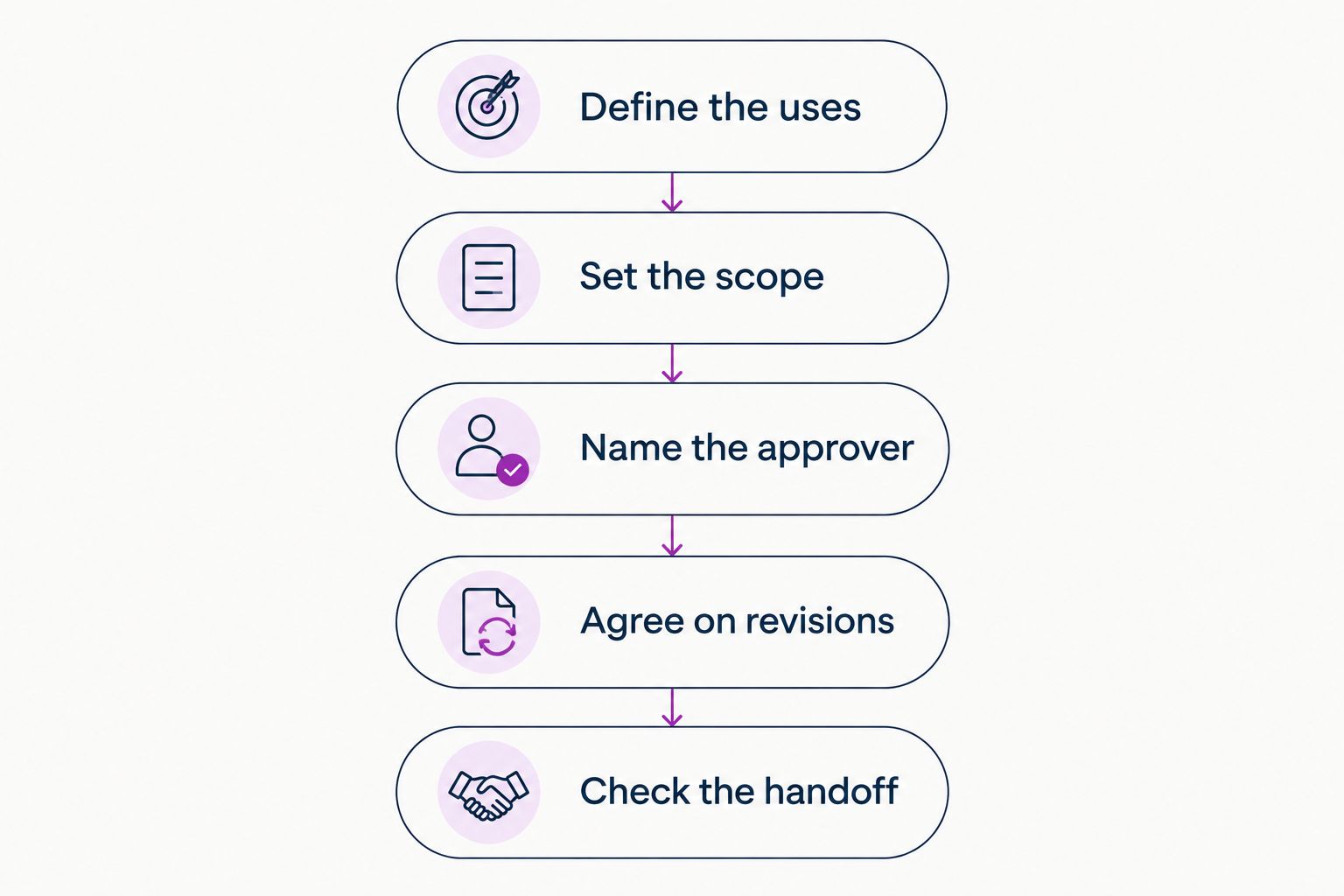
Control the assignment before you control the design details. For your 2026 project, use this sequence to make the proposal easier to evaluate and the approval process easier to manage.
- Define the uses. List where the logo must appear, including the website header, printed materials, and any application with unusual space restrictions.
- Set the scope. Choose adaptation, original-logo work, or a broader identity assignment. Keep optional rollout work separately identified.
- Name the approver. Consider assigning 1 final approver to consolidate feedback. Other people can contribute without sending conflicting instructions directly to the designer.
- Agree on revisions. Write down what counts as refinement and what requires a new scope. Confirm how the provider handles additional requests.
- Check the handoff. Review the files, usage terms, and practical applications before closing the project.
The point is not to eliminate collaboration. It is to give the designer a clear brief and give your business a clear acceptance process.
What files should you ask a logo designer to deliver?
Ask for files matched to your intended uses, not an unexplained folder of exports. A vector file stores shapes rather than a fixed grid of pixels, making it useful when artwork needs to scale; a PNG can provide a transparent background for suitable digital uses.
Ask the designer to identify which files are intended for websites, printing, and future editing. File extensions alone do not establish ownership, and an export is not necessarily the original editable artwork.
For a practical acceptance check, request previews in 3 placements: a website header, a business document, and a small profile image. These are suggested review locations, not a universal package requirement.
Also consider whether you need 2 layouts: horizontal and stacked. Request them only if your actual applications justify both; do not assume every logo needs every possible variation.
Does a logo quote include website changes?
A logo quote includes website changes only when the scope says so. Replacing a header image, checking its display on different screen sizes, and updating other brand references are implementation tasks to identify separately.
The Little Web Design Shop is best suited to small business owners seeking website and marketing collateral support. Confirm logo-specific services and deliverables before treating website support as a logo-design package. The practical benefit is support for those stated business materials; the boundary is that a logo commission is a separate service to verify.
For your 2026 rollout, decide who will receive the approved files and who will update each material. Keep that responsibility in writing so approval of the artwork does not become an unfinished handoff.
Is a logo enough to make a small business look professional?
A logo is only part of your presentation. Your website still needs clear information, readable content, working contact methods, and an obvious next step for customers.
Judge the logo in context rather than as an isolated presentation slide. A design you like still needs to work with your business name, page layouts, and everyday materials.
If the website itself needs attention, separate that decision from the logo decision. Changing the mark does not resolve unclear service descriptions or a broken inquiry process.
FAQ
How much does logo design cost for a small business in 2026?
Logo design costs depend on the agreed scope, so compare written quotes for the same assignment. Separate adaptation, original-logo design, and visual-identity work, then check revisions, files, rights, and implementation.
What’s the best way to compare logo design quotes?
Compare logo design quotes against the same written brief and deliverables checklist. Ask each provider to identify exclusions and explain how requests outside the agreed scope are handled.
Is an original logo better than adapting my existing logo?
An original logo fits a need for a new visual direction; adaptation fits a defined change to existing artwork you are permitted to use. Choose based on the business problem rather than assuming new artwork is always necessary.
Do I own my logo after paying the designer?
Your agreement determines your ownership and usage rights. Confirm the written terms for the artwork, editable files, and any licensed assets before work begins.
What should I check before approving a logo?
Check the logo in the actual places your business will use it. Review readability, layout, supplied files, and the agreed usage terms before accepting the handoff.
Does The Little Web Design Shop provide website and marketing material support?
The Web Design Shop builds and maintains websites, e-commerce stores, and marketing collateral for small business owners and organizations. Confirm logo-specific work separately rather than assuming it is included.
One last thing
Ask for the handoff list before you approve the proposal. It is easier to compare defined deliverables at the start than to discover after approval that a required layout, editable file, or website update was never included.
For a 2026 project, keep the brief, approved artwork, agreement, and delivery notes together in a business-controlled location. Your next designer or website provider should be able to understand what you own and which files to use without reconstructing the project.